
What Grief Feels Like
 Posted by
Mary Ann Burrows
Posted by
Mary Ann Burrows
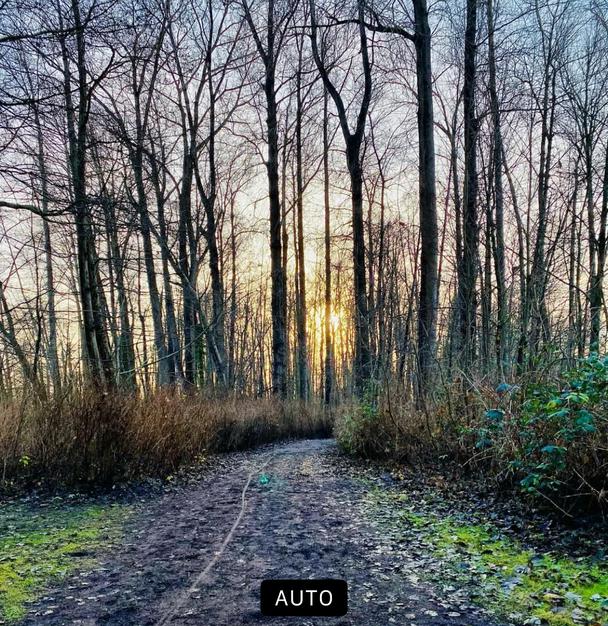
For the past seven months—since my father slipped beyond the veil and into the great mystery—I’ve been walking through what I can only call the season of grief. And let me tell you: it has not been gentle. It has been a rough, raw, soul-tumbling ride. I thought I was ready. After all, I’d had my whole life to prepare, to rehearse this leaving in my heart. But grief doesn’t care about your tidy plans. It comes barefoot, banging its drum, cracking you open in the middle of the grocery store. I wasn’t ready—not for this kind of hollowing, not for this sacred undoing that remakes you from the inside out. He lived to be ninety-three. A long, full life. We all saw the slow unraveling—his body dimming, his strength tapering off like the last light of day. It wasn’t sudden. It was the kind of decline that prepares you, or so I thought. I told myself it was his time. That people die. It was his turn. And I suppose I believed I’d be okay. That I’d feel lucky to have had him for so long. That I’d cry a little, gather myself, and move forward with grace. But that’s not how it goes. It doesn’t matter how long they lived—when someone you love that deeply leaves, it rips the ground out from under you—no matter how much you thought you were ready. I’ve discovered in these past months that grief isn’t tidy—it is holy and unruly, a wild visitor that weaves into my skin, settles into my lungs, and changes the shape of everything I touch. Even the smallest things carry its weight. The way I stand at the counter in the morning, the hush in the room as I pour coffee into my chipped blue mug—it all feels different now. I do it more slowly, more carefully, as if the day itself is sacred and might shatter if I move too fast. Grief has made me reverent. It has made the ordinary luminous with ache—and, oddly, with grace. I’ve been writing a lot about loss because, well, I’m still in it—and it’s still in me. Grief doesn’t have an expiration date. It doesn’t vanish after a week, or even a season. It becomes a life-companion, a rock in your pocket, or one you learn to walk beside. It braids itself into your conversations, into the colour of the sky, into the strange ache that rises when you’re alone and suddenly undone by a song. It’s sneaky that way. Sacred, too. Because even in its sorrow, it opens you—to beauty, to memory, to love that hasn’t gone anywhere. Not really. The page has been my lifeline—my fire-walk, my psalm, my way through the dark forest. It keeps me tethered to what I’ve lost, yes, but also to what remains: the breath in my chest, the sky above me, the holy pulse of now. Writing reminds me to look up. To notice. To bow to the small, shimmering details—the ones that hold the whole world inside them. The ones that say: You are still alive. I don’t put words on paper to fix anything. I’m not trying to neaten the edges of grief or pin it down like some obedient thing. No. I write to witness. To make space. To let the ache breathe. This is my practice, my prayer, my cracked-open hallelujah. A way of whispering: I’m still here. I still feel. I still care enough to notice. In a world that spins too fast and asks too much, writing slows me. It lays a gentle hand on my shoulder and says, Look. Look at the way the light pools on the kitchen floor at 4:37 p.m. Listen to the tremble in your voice when you say his name. Look at the love that lingers. This is how I remember my father. This is how I begin again. Somewhere in this long season of sorrow, I’ve come to know: I am not alone. None of us are. Death is the great leveller. Grief is the thread that binds us. And though every loss is its own language, we are all fluent in the ache. We can walk each other through it—with gentleness, with story, with open arms and soft eyes. And here’s something else I’ve learned: I am more like my father than I ever understood. He was a dreamer. A scribbler. A collector of quotes, of meaning, of moments. He believed in the slow things—the things that grow roots before they bloom. He moved through the world with a kind heart. For nearly one hundred years, he had been paying close attention to the world. A few years ago, he handed me a small green book—worn at the edges, humble as moss. Inside: page after page of his favourite quotes, all written in his careful, steady hand. At the time, I barely looked at it. I slid it into a drawer, the way we do with things we don’t yet know how to hold. But after he died, I remembered. I dug through the drawer, found the little book, opened its soft, creased cover—and there he was. Line after line, thought after thought. It became, in an instant, the most sacred thing I owned. Each page, each line, feels like a gift he left behind—a way to find him again. And maybe, in reading his words, I’ve started to write my own differently—with more listening, more stillness, more heart. I can see more of him in this little green book—his thoughts, his values, the things he held dear—than I ever could when he was alive. Maybe this is how we carry the ones we’ve lost: not by letting go, but by letting them shape the way we live. Inside, I found this: “Ideals are like stars: we never reach them, but like the mariners of the sea, we chart our course by them.” He had written that in his little green book—just that line, paraphrased from the longer quote, in his clean, measured handwriting. And when I read it, it stopped me. Not because we’d ever talked about stars—we hadn’t. Not directly. But because it felt like him. Like something he lived by without needing to say. We never talked about reaching stars or naming our ideals out loud. But we both knew what guided us. The unseen things. The inner compass that doesn’t waver even in the fog. Kindness. Fairness. Curiosity. Wonder. A quiet consistency. That shared belief that a life is shaped not by what you grasp, but by what you follow. Maybe that’s the whole truth of it: ideals aren’t there to be captured. They’re there to keep us oriented. Like stars on a cloudy night—you can’t always see them, but you trust they’re there. He never preached his values. He just lived them. You could see it in the way he greeted every waitress by name and asked about her life, her hopes. You could see it in the way he never rushed a task, never cut a corner. The way he spoke slowly, and listened even slower. He once kept his red geraniums alive all winter under a heat lamp in the basement. That’s who he was—quiet devotion, always tending toward beauty.Tender persistence. He didn’t need to name his North Star—he just kept walking in its direction. We were more alike than I ever realized. And this one, quiet line, tucked into his green book, helped me see it. A few months after he died, I flew to Hawai‘i alone. I needed the sea, the salt, the sky—to be held by something vast enough to carry what I couldn’t. Each evening, I sat on the lanai and wrote—pen moving like prayer across the page—while Saturn hovered above the palms, bright and unblinking, like a sentinel in the dark. Saturn felt like a witness. Like someone who had seen it all and still chose to stay. I spoke to her. About my father. About the broken world. About the hollow ache sitting heavy in my chest. And in her quiet, ancient way, she answered—not with words, but with presence. Stillness. Light. And writing—writing saved me. Gave shape to the formless. Gave breath to the unsayable. Thirty-some poems came—grief poems, memory poems, poems soaked in saltwater. They arrived like the tide: relentless, holy, uninvited, and absolutely necessary. I’ve gathered them now into a book. A season-of-grief offering. A thread between the ache and the light. A way of saying: this is what love looks like, even after the last goodbye. I didn’t write this poetry collection because the world needed another book about grief and loss. I wrote it because I felt lifeless after the storm. Words became the rope I followed out of the dark hole. Poetry was breath. It was balm. I wrote it to honour my father—to trace the outline of his life in language, to let love keep speaking, even after. To keep a promise to love what he loved. To hold his voice beside mine, just a little longer. And maybe, in the process, these words will offer a rope to someone else—someone deep in the hole of sorrow, searching for a way out. If you’re holding grief too, I hope this book meets you gently. Here is one poem that belongs to the spring in my season of grief—the season I’ve been walking through lately. They say it takes a year to walk the first full circle of loss—to greet every holiday, every birthday, every ordinary Tuesday without the one you love. But grief doesn’t keep track that way. It’s more like water against stone—quiet, steady, reshaping everything you thought was solid. And still—seasons turn. Light slips back in, sideways at first. The sky softens. One day, you find green where there was only ash. You laugh—and it feels like mercy, not betrayal. The absence becomes something you can carry. Not a gaping wound anymore, but a scar you’ve made peace with. A place that knows your name. If you’re in this season too, hold yourself close. There is no wrong way through. Be tender. Be slow. Trust the dark. Trust the light. Trust the return. Let’s see what June brings.
—Carl SchurzA Season of Grief
You died in October.
Grief arrived—
like fire in the marrow,
like smoke in the lungs,
like the howl of something sacred
being torn away.
You left
and my world tilted.
November: I slept,
cried,
forgot how to eat.
December blurred—
a fog of sweaters and soup
and empty chairs.
I moved like driftwood
through dark water,
like a woman half-made of salt.
In January—
I ran
to the sea.
Barefoot, hollow,
I drew circles in the sand with my toes,
made mandalas out of sticks
and shell
and ache.
I became a rock.
Then a grain of sand.
Then a prayer being spoken by the tide.
I let the waves
take me,
remake me,
whisper the names of the lost
in a language older than sorrow.
In February—
I listened.
I listened
to the breath of the ocean,
the throb of the moon,
my own heartbeat
saying your name
again
and again
and again.
March came.
And with it—
the little green book you left.
Your handwriting—
still alive.
Tommy Douglas.
The history of Saskatchewan.
The dream of justice
in a prairie tongue.
Education.
Economics.
People, always.
The people.
The pages smelled like you—
motor oil, cedar,
dust, leather, sweat.
Honest work.
Handmade living.
The prairie rose in my chest
and bloomed.
In April,
I read your words like scripture.
Laid them on my tongue
like communion.
Cried into the corners
you once turned down,
held the pages like your hands,
and let them teach me
what love leaves behind.
And now—
May.
The cedars wear green again.
The soil is damp and ready.
The forest is whispering:
Begin.
I am a different woman
because of your life.
Because of your leaving.
I feel new roots inside me.
I feel tender shoots
rising up
through the hollowed places.
These are mine now.
To water.
To protect.
To pass on.
And here is the wildest thing:
I feel you more now—
in absence—
than I ever did in flesh.
Maybe it’s true what they say:
Love never dies.
It just changes form,
and starts growing
somewhere new.
Let’s see what June brings.
Words and Memory by Mary Ann Burrows What I’ve come to know—deep in the marrow—is that grief isn’t a moment. It’s a whole season. Long. Slow. Sacred. It has its own rhythm, wild and unhurried. It doesn’t answer to calendars or clocks. It moves by moonlight and memory.